

|
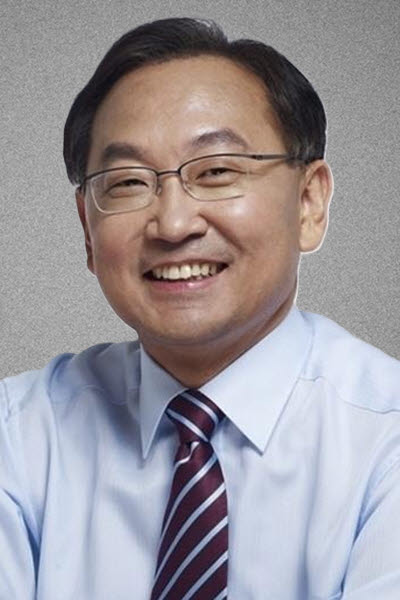
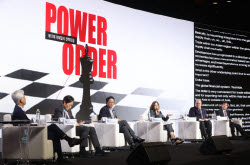
Navigating successfully through a “triple megaton-level shockwaves” during his tenure 10 years ago; Brexit, China‘s retaliation over THAAD deployment, and the launch of the Trump administration, former Deputy Prime Minister Il-ho Yoo is once again calling for ’a return to fundamental principles ‘in the face of a new wave of global uncertainty. He served as the Minister of Land, Infrastructure and Transport in 2015, and in the same year, was appointed Deputy Prime Minister and Minister of Ministry of Economy and Finance, serving as the final economic commander-in-chief of the Geun-hye Park administration. Until February of this year, he also served as Chairman of the Presidential Regulatory Reform Committee.
“If the U.S. begins to ignore distant global conflicts and strictly prioritizes its own economic self-interests, the free trade order will inevitably be shaken.” He expressed concern, saying, “An export-oriented economy like Korea this will result in a direct and significant impact.”
U.S. is aggressively reinforcing what is being called the “Donroe Doctrine,” openly pursuing hegemony in the Western Hemisphere while maintaining its strategic priorities in the Indo-Pacific and the Middle East. As a result, protectionist barriers justified under the banner of ’economic security‘ are rising, with stricter requirements on semiconductor and battery supply chains. For Korea economy, relying heavily on international trade, this presents a harsh reality where the previous free trade system no longer functions as before.
Adding to these concerns are uncontrollable geopolitical risks. Following recent military actions by the U.S. and Israel against Iran, tensions in the Middle East have intensified sharply, threatening to push international crude oil prices toclose to the $100-per-barrel mark. For Korea, relying almost entirely on energy imports, this creates a double burden of rising production costs and mounting inflationary pressure. This, in turn, is highly likely to undermine the price competitiveness of Korean export products.
Yoo recalled the painful experience of 2016, when Korean companies were forced to shift their target markets to countries like Vietnam due to Chinese economic retaliation over Seoul’s THAAD deployment.
“During the THAAD dispute, restrictions on Korean cultural content and broader economic retaliation caused major losses for Korean companies in China, forcing many to relocate to Vietnam,” he said. “The current U.S.-driven uncertainty is just as threatening. Even if it involves some short-term costs, the government‘s role is to resolve these these U.S.-driven uncertainties as quickly as possible so that corporations can calculate costs and formulate proper responses.”
Regarding the global crude oil price surging triggered by geopolitical risks, Yoo called for a “textbook response” in fiscal and monetary policies. He warned that it is highly dangerous for the government to expand spending into the market at a time when inflationary pressures are aggressively intensifying.
“When inflationary pressure rises, tightening measures are the natural response,” he advised. “If it is difficult to raise interest rates immediately, policymakers should at least consider a principled approach, such as controlling the money supply.”
Furthermore, considering the unique characteristics of crude oil, for which supply chain diversification is difficult, he added, “There is no realistic alternative other than aggressively securing transportation routes and preemptively stockpiling supplies, even at higher costs.”
On fiscal policy, he reaffirmed his commitment to the principle of ’fiscal soundness.‘ He cautioned against using recent improvements in corporate tax revenues, driven largely by strong semiconductor-sector sector, as justification for politically motivated spending initiatives.
Regarding supplementary budgets involving cash handouts to the entire population, he advised,
“A targeted ’pinpoint support‘ system tailored precisely for those whose survival depends on fuel prices, such as small business owners or logistics workers, would be far more effective.” He emphasized that the same amount of money should be used to maximize policy impact and avoid political misunderstanding.
The keywords he repeatedly emphasized were “fundamentals” and “crisis management.” While overseas variables are beyond our control, vulnerable domestic structures can and must be fixed by our own hands.
Finally, he stressed, “Hidden behind the current semiconductor boom are vulnerable sectors, such as small business owners and petrochemicals, have already reached their limits. ”Taking preemptive actions, including structural restructuring of these visibly vulnerable industries, before problems become unmanageable is the truest definition of crisis management.“
◇About Former Deputy Prime Minister Yoo Il-ho
△B.A. in Economics, Seoul National University △Ph.D. in Economics, University of Pennsylvania △Former Research Fellow, Korea Development Institute (KDI) △Former President, Korea Institute of Public Finance (KIPF) △Former Chairman, Special Committee on Tax Reform △Member of the 18th National Assembly △Former Minister of Land, Infrastructure and Transport △Deputy Prime Minister and Minister of Ministry of Economy and Finance