Hanmi Rides Obesity Drug Momentum
Hanmi Pharmaceutical’s share price jumped 6.57% (20,500 Won) to close at 332,500 Won, according to KG Zeroin MP Doctor. The rally came as Eli Lilly’s obesity drug Mounjaro (tirzepatide) exceeded the initial prescription volume of Novo Nordisk’s Wegovy within less than a month of its launch in Korea. The market is now shifting its focus to Hanmi’s own obesity pipeline, expected to deliver superior efficacy.
|

Data from Korea’s Health Insurance Review and Assessment Service (HIRA) showed Mounjaro recorded 18,579 DUR (Drug Utilization Review) checks in just 12 days after launch, already surpassing Wegovy’s 11,368 checks logged in its first month. With Wegovy currently maintaining about 80,000 monthly checks, Mounjaro’s rapid uptake suggests accelerating momentum. Analysts cite its clinical profile as the main driver: a dual-acting GIP/GLP-1 receptor agonist, Mounjaro achieved weight-loss rates more than 6~7 percentage points higher than Wegovy, with average reductions exceeding 20% in trials, alongside improvements in waist circumference, visceral fat, and other metabolic markers. Its competitive pricing has further fueled physician and patient switching.
At the 2025 EASD meeting in Vienna, Hanmi showcased six new studies including HM17321, a next-generation obesity therapy, a triple agonist (HM15275), and oral candidate HM101460. The company positioned its pipeline to go beyond weight loss, targeting unmet needs such as sarcopenia and dosing convenience. At ADA 2025, Hanmi also unveiled primate data demonstrating simultaneous fat reduction, muscle preservation, and improved metabolic outcomes. Industry observers noted that Mounjaro’s dominance has heightened investor focus across the obesity drug space, acting as a catalyst for Hanmi’s share price rally.
Curiux, From Revvity to Global Contract
Curiux Biosystems advanced 11.13% (5,700 Won) to close at 56,900 Won on optimism over its cell-processing automation platform. Cell preparation, a crucial step in drug development and diagnostics, has long been performed manually?a slow and variable process. Curiux’s automated pre-processing systems standardize this work, delivering reproducible and accurate results.
|
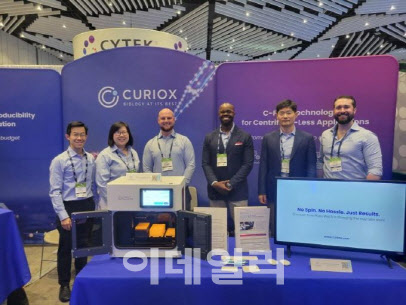
The company estimates that manual cell-analysis workflows still represent a global market worth roughly 19 trillion Won (US$ 14 billion), and it aims for a 30~50% market share over the long term. Although earnings have yet to materialize 2024 revenue was 4.6 billion Won against a net loss of 8.1 billion Won, and H1 2025 revenue was only 1 billion Won with a loss of 18.3 billion Won partnerships are fueling expectations. Late last year, Curiux partnered with Revvity, the US-based diagnostics and life-science solutions company with 11,000 employees and 2024 revenue of US$ 2.7 billion, to launch its next-generation “Pluto” analyzer series. CEO Nam-Yong Kim recently said market reception has been strong and revealed ongoing contract talks with four of the world’s top liquid-handling workstation manufacturers, suggesting breakeven could be reached this year.
Helixmith Gains on China Commercialization
Helixmith shares climbed 12.0% (690 Won) to close at 6,440 Won after reports that Engensis, its long-developed gene therapy for critical limb ischemia (CLI), is on the verge of approval in China.
|
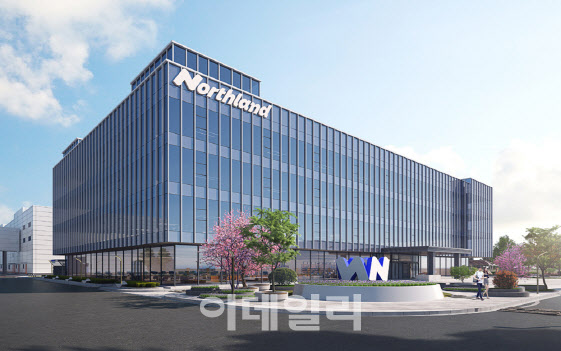
The company originally licensed Engensis rights to China’s Northland in 2002 under a structure that required no upfront payment, but royalty streams tied to post-launch sales. Northland has since completed Phase 1~3 trials domestically, with Phase 3 data turning out positive. According to industry sources, China’s NMPA has completed all seven stages of its technical review, leaving only administrative procedures before potential market approval as early as the second half of this year.
Northland has already built a 1.5 trillion Won(US$ 1.1 billion) manufacturing plant for commercialization. Under the agreement, Helixmith will receive royalties for seven years at the higher of 7% of net sales or 4% of gross sales, after which terms will be renegotiated. With no approved pharmacological therapy for CLI globally, Engensis could capture a near-monopoly, in a Chinese market projected to expand from 800 billion Won this year to 7.6 trillion Won in the coming years. Separately, Helixmith is also moving to sell its headquarters building valued at about 120 billion Won, which could generate 50 billion Won in profit. A company spokesperson emphasized, “Having moved beyond past clinical failures in the US, we are preparing for a new leap. If Engensis becomes the world’s first CLI therapy, significant revenue expansion is expected.”